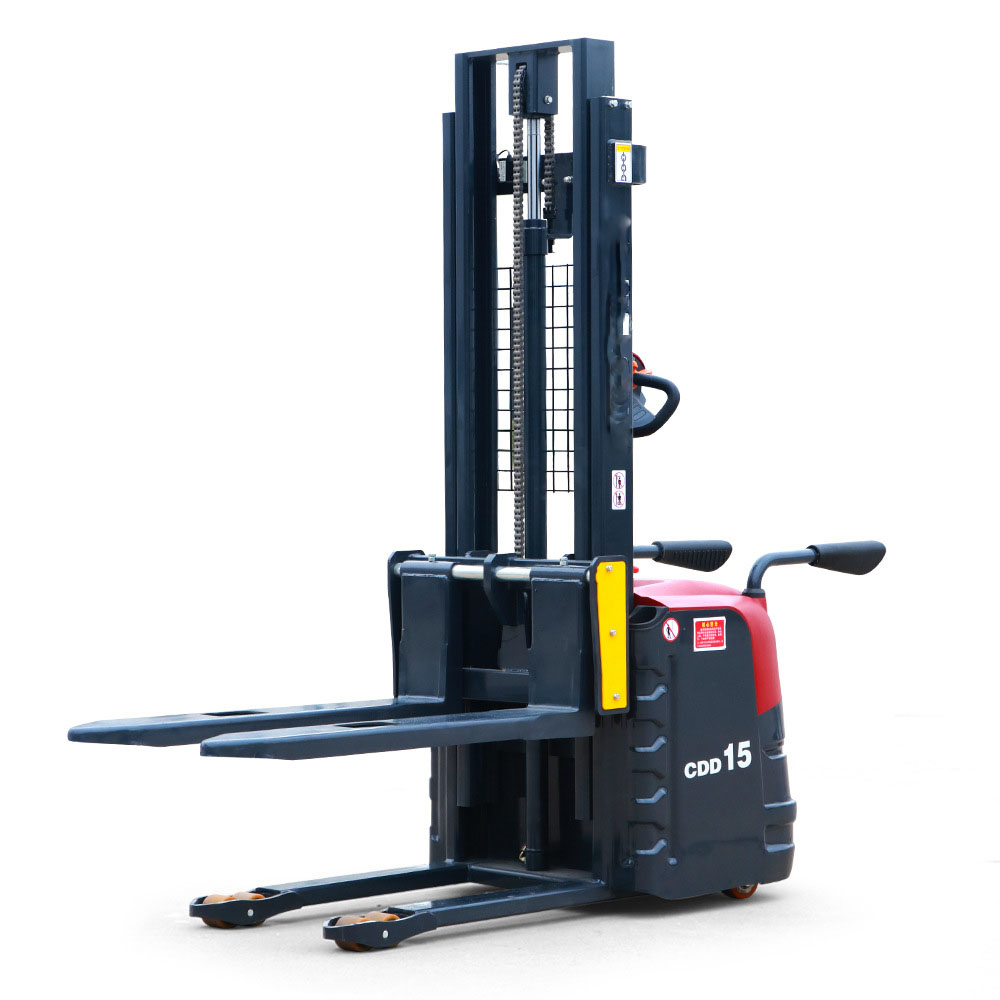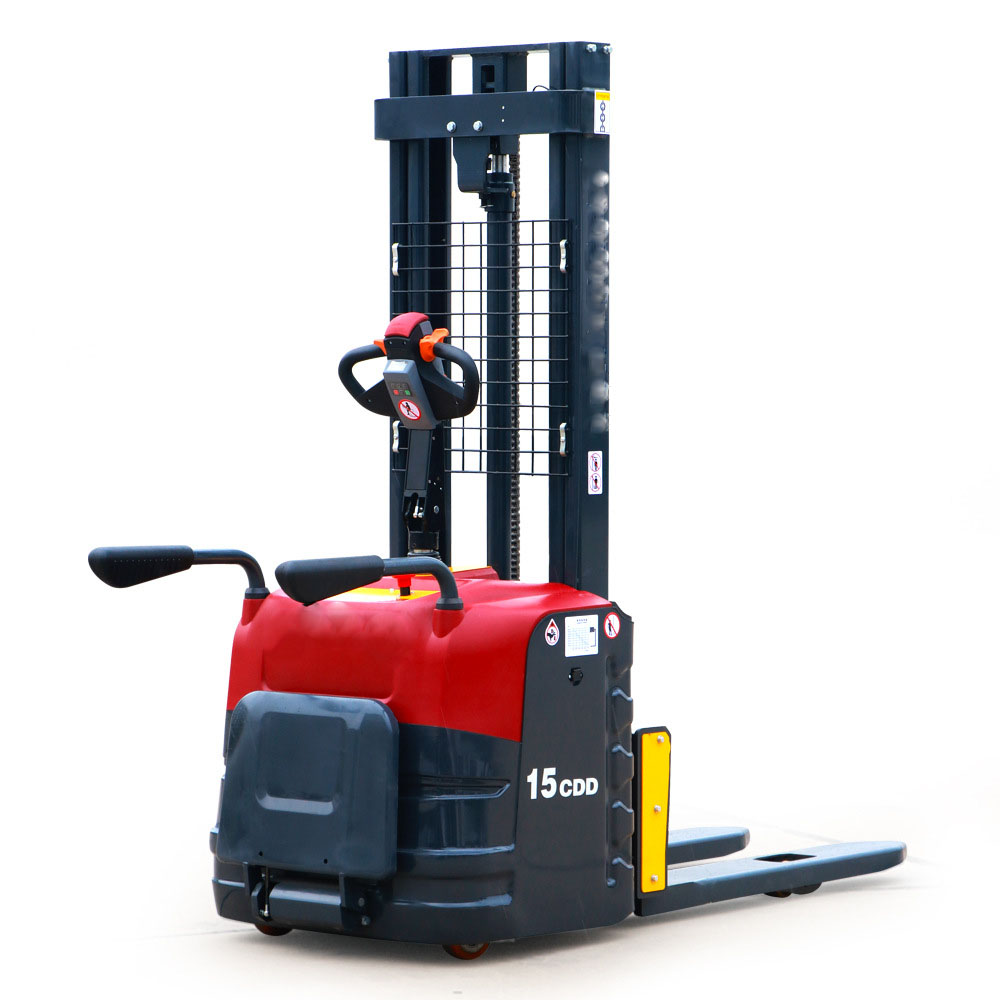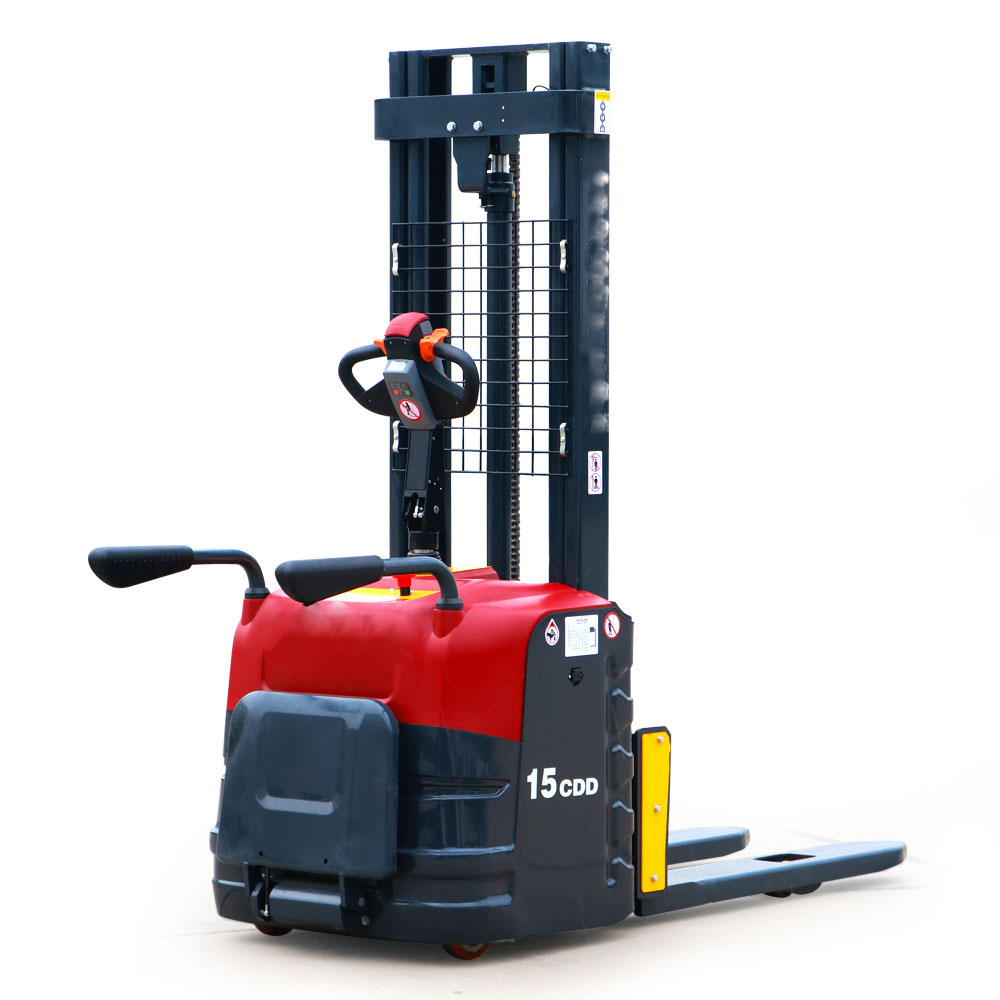
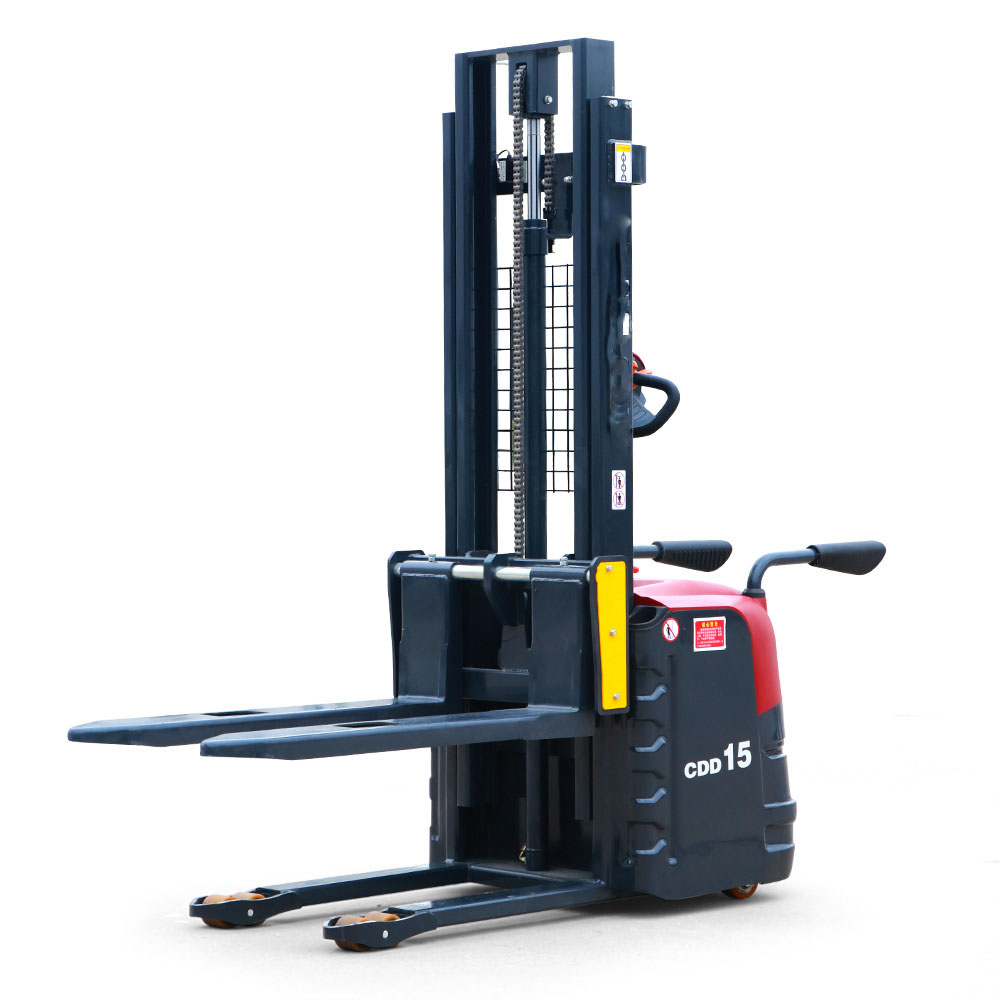
Power System: Powered by a battery pack (common voltage 24V or 48V), driving the travel motor and hydraulic pump motor. Advanced models use an AC drive system, offering advantages such as rapid response, precise control, and maintenance-free operation (no need to replace carbon brushes).
Lifting System: Includes the mast, forks, lifting cylinders, and chain. The mast is mostly made of high-strength steel to ensure stable lifting. The dual-cylinder design, combined with a synchronous linkage, enables smooth lifting even under off-center loads.
Control System: Integrates an AC controller with regenerative braking and reverse braking functions, optimizing performance under different working conditions. Typically equipped with an intelligent display instrument that shows real-time information such as battery level and operating time.
Chassis and Handling: The chassis structure is robust, and the handles are ergonomically designed. Some models feature electronic steering to reduce operator fatigue. The drive motor uses an offset layout design, effectively improving stability and reducing the turning radius.